
"far infrared roasting"
200 article(s) found

How does the coffee roaster work? What are the types of coffee roasters? Direct fire, semi-direct fire, heat
Professional coffee knowledge exchange more coffee bean information please follow the coffee workshop (Wechat official account cafe_style) coffee roaster working principle? What are the types of coffee roasters? What's the difference between direct fire, semi-direct fire and hot air? One pot, two beans, three baking. In this sentence, the factors that affect roasting coffee are pointed out. Pot, which is used to bake coffee.

Coffee roasting mechanism and principle-Starbucks concentrated roasted coffee beans
The inner pot of the coffee roaster is punched and processed, and the burner flame at the bottom can directly contact the coffee beans. The direct-fire flavor is attached to the coffee and becomes a fragrant and delicious coffee. The flame and heat of the burner are the main heat sources for baking. The outer side of the iron plate of the semi-hot air inner pan is then wound with a layer of iron plate to form an air layer between the iron plate and the iron plate. The raw bean will not touch the bottom of the cause.

Steps to roast coffee beans-Starbucks concentrated roasted coffee beans
Steps for high-quality roasted coffee beans Starbucks concentrated roasted coffee beans made of cast iron made the inner pot of the R500 up to the same material level as most imported models, and we were complacent for a long time until we learned about plasma spraying technology. Far infrared material has a large-scale application in the food industry, but no one has ever tried to use it in the harsh environment of the roaster.

Introduction of home brand recommendation of self-made coffee bean roaster
Home-made coffee bean roaster home brand recommendation far-infrared material has a large-scale application in the food industry, but no one has ever tried to use it in the harsh environment of the roaster. The change of temperature difference, inner pot expansion, friction and coffee bean impact all pose challenges for us. Until we tried to use plasma spraying technology to firmly attach the ceramic far infrared material to the

Steps of roasting coffee beans-detailed diagram of roasting degree
Steps of boutique roasting coffee beans-detailed diagram of the degree of baking the material of cast iron makes the inner pot of R500 reach the same material level as most imported models, and we were proud of it for a long time until we learned about plasma spraying technology. Far-infrared materials are widely used in the food industry, but no one has ever tried to use it in the harsh environment of a roaster. Temperature

Steps for baking coffee beans-Starbucks Italian roasted coffee beans
The step of boutique roasting coffee beans-Starbucks Italian roasted coffee beans, so after spending almost all the money at that time, we made the R500 series cast iron inner pot out of cast iron, which is still in use today. The material of cast iron made the inner pot of R500 reach the same material level as most imported models, and we were proud of it for a long time until we learned about plasma spraying technology. Far infrared material
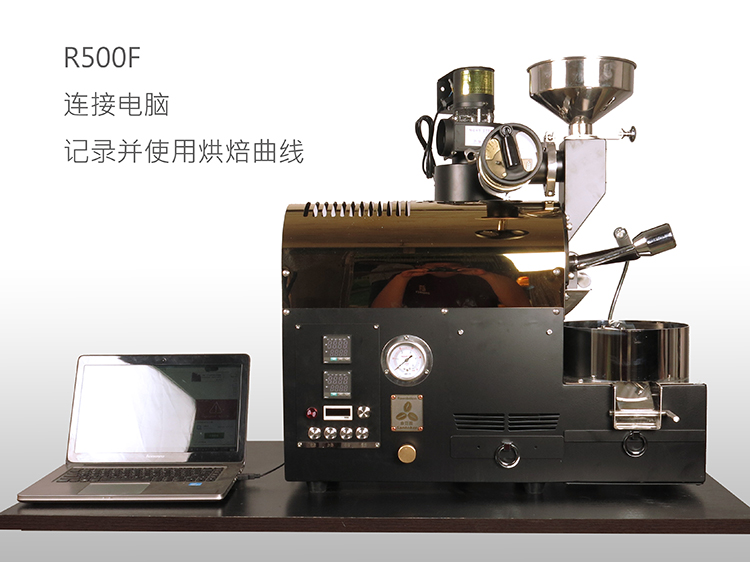
Coffee roaster San Douke brand introduction: San Douke R500F coffee roaster santoker
The inner pot is shapeless and will not destroy the movement track of coffee beans. Cast iron inner pot surface plasma spraying far infrared ceramic emission far infrared ray through coffee beans heating outer ceramic protection inner pot can effectively avoid bean surface scald so fast baking firepower is valuable otherwise the speed is fast beans are all bitter. You can see it, and there is better quality assurance in places you can't see.
Introduction to the baking process of coffee beans at eight prices
Coffee roasting introduction: after spending almost all the money at that time, we made the R500 series cast iron inner pot out of cast iron, which is still in use today. The material of cast iron made the inner pot of R500 reach the same material level as most imported models, and we were proud of it for a long time until we learned about plasma spraying technology. Far-infrared materials are widely used in the food industry, but

Charcoal roasted coffee originates from the Japanese way of roasting coffee using charcoal fire.
Coffee roasting with charcoal fire originating in Japan. Coffee taste soft and mild, with charcoal aroma should be the characteristics of this baking. The proportion of charcoal fire far infrared ray is high, and the quality of roasted coffee beans is more uniform inside and outside. The disadvantage is that the cost is high, the production capacity is small, and the adjustment of carbon firepower is also difficult. At present, most of the so-called charcoal-roasted coffee are not charcoal-roasted coffee, but those that strengthen the bitterness of burning.

Coffee roasting with charcoal fire originated in Japan
Coffee roasting with charcoal fire originating in Japan. Coffee taste soft and mild, with charcoal aroma should be the characteristics of this baking. The proportion of charcoal fire far infrared ray is high, and the quality of roasted coffee beans is more uniform inside and outside. The disadvantage is that the cost is high, the production capacity is small, and the adjustment of carbon firepower is also difficult. At present, most of the so-called charcoal-roasted coffee are not charcoal-roasted coffee, but those that strengthen the bitterness of burning.

Disassembly of coffee roaster-brand structure diagram of hot air coffee roaster
Coffee roaster disassembly-hot air coffee roaster brand structure diagram direct type and semi-hot air type drum structure is very different, but the basic condition is to have a suitable speed of mixing blades that can roast beans evenly. If you put as many raw beans as the capacity of the roaster, it will cause uneven baking and difficult exhaust. Most of the causes come from the structure of stirring blades. Baking

Coffee roaster structure usage brand ranking
Coffee roaster structure usage Brand ranking 1, Tubular Burner Coffee roaster principle DISCOVERY to introduce the gas burner used in our FUJIROYAL1 roaster. Bend the iron pipe to drill 72 2.3 "holes with an electric hammer. This process is very practical and is usually the work of new members in our club. 2. Coffee roasting with Bunsen burner

Coffee roaster exhaust roasting technology Italian espresso
Coffee roaster exhaust roasting technology Italian espresso 1, Germany's probat coffee bean roaster old brand, large and medium-sized machines, semi-automatic, automatic various types are complete, sophisticated design, expensive. 2. Japan fuji-royal coffee bean roaster Japan fuji coffee bean roaster, the performance is also good, but the same price is not cheap choice of inner pot material

Coffee roaster, bean roaster, santoker coffee bean roaster, three beans.
R2.5D is an exquisite coffee roaster designed for cafes and roasters. Our team is a professional engineer from the nuclear industry and aerospace industry. After four years of precipitation, we have brought the highest quality process, design and quality. As a leading manufacturer in the industry, we continue to introduce new technologies and processes into the field of coffee roasters and innovate to make the best coffee roasting.

The steps of roasting coffee beans
The choice of material for the inner pot is the most entangled place when making products. In the initial design, stainless steel materials can be rolled and welded, which is convenient for manufacturing. The initial investment of cast iron materials is extremely large, so stainless steel has become a very tempting choice. However, after testing, it was found that stainless steel inner pot could not transfer heat evenly to the entire inner pot.

The steps of fine roasting coffee beans Technical degree Taste introduction
The steps of roasting coffee beans are summarized as stewing below 30, and adjusting according to the exhaust gas volume above 30. An important indicator of exhaust gas volume is the comparison between the speed of exhaust gas temperature rise and the speed of bean temperature rise. A general rule is that the exhaust temperature rises faster than the bean temperature, the bean taste will be clean but the flavor will be weak, the exhaust temperature rises faster than the bean temperature.

Detailed steps of roasting boutique coffee beans
Introduction to the detailed steps of baking boutique coffee beans the selection of the material of the inner pot is the most tangled place when making the product. in the initial design, because the stainless steel material can be welded and welded, it is convenient to manufacture, while the cast iron material has a great initial investment. Therefore, stainless steel has become a very tempting choice, but after testing, it is found that the stainless steel inner pot can not evenly transfer heat to the whole inner pot.
A brief introduction to the steps of roasting coffee beans
Detailed description of the steps for fine roasting coffee beans the thermal impulse was created in the previous stage, and the temperature environment required for the rapid caramelization and Mena reaction was about 170C to 205C. (caramel melting point is 186C) at this time, the water in the coffee cell continues to evaporate, causing a chemical reaction, the sugar in the cell begins to caramelize and the amino acids also interact with carbohydrates.

The history of the coffee roaster: dreams or dreams, what if they come true?
In the summer of 2012, because they couldn't find a suitable roaster, they made one by themselves and named the team Sandouke. With our love for coffee and our dedication to pursuing the ultimate, we started the business of fine coffee. Before that, designers worked as stable engineers in the nuclear power and aerospace industries until they became passionate about coffee and created beauty.

Introduction of coffee bean roaster structure map degree brand taste grinding scale production area variety
Coffee bean roaster structure map degree brand taste grinding scale production area variety introduction baking process will produce a series of chemical changes. After about 5-25 minutes of baking (depending on the temperature selected), the green coffee beans lose some humidity and turn yellow. In the process, coffee beans swell, changing from a sturdy, high-density raw bean to a low-density one.